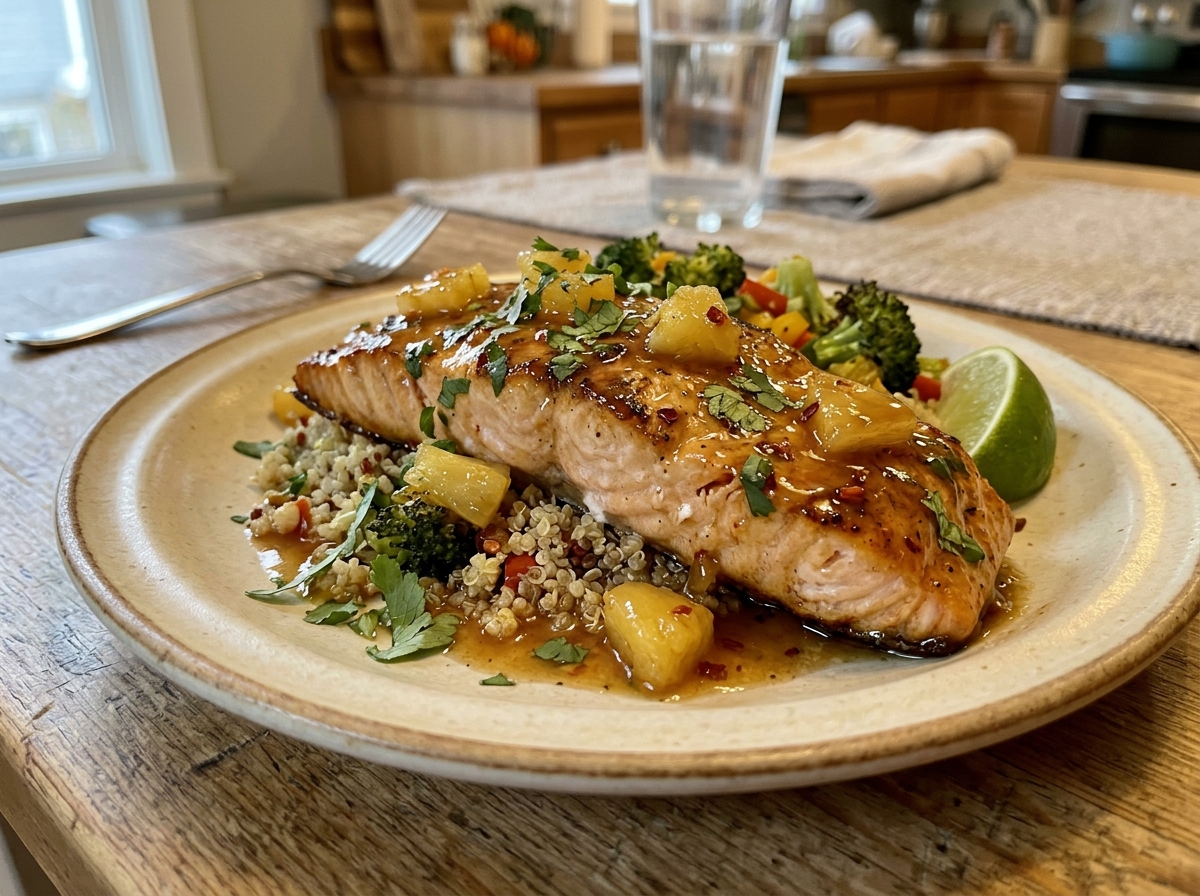
Picture this: the sizzling sound of fresh salmon hitting a hot skillet, immediately releasing an irresistible aroma of savory seafood and sweet garlic. As the caramelized glaze bubbles down, rich tropical notes of pineapple and floral honey waft through your kitchen, promising a meal that feels like a luxury resort dinner made in under 20 minutes.
With a gently crisp exterior that yields to tender, buttery flakes inside, every single bite offers an explosion of sweet, tangy, and savory flavors. It is effortless enough for a hectic Tuesday night, yet stunning enough to serve to guests at your next dinner party.
Why is Honey Pineapple Glazed Salmon So Good?
- Tropical Flavor Burst: The natural acidity of pineapple perfectly cuts through the rich, buttery fat of the salmon.
- Sticky Honey Glaze: Caramelizes beautifully over high heat, creating a glossy, finger-licking coating.
- Twenty-Minute Magic: Goes from your cutting board to the dining table in under twenty minutes flat.
- Nutrient Dense: Packed with heart-healthy omega-3 fatty acids, high-quality protein, and vitamin C.
Ingredients
- Salmon Fillets — Delivers rich omega-3 fatty acids and a tender, flaky protein base.
- Pineapple Juice — Provides a sweet, tropical acidity that cuts through the rich fish.
- Fresh Pineapple — Adds delightful bursts of juicy texture to the pan sauce.
- Honey — Creates a lush, caramel-like sticky glaze when reduced in the skillet.
- Low-Sodium Soy Sauce — Injects an umami-rich salty backbone without overpowering the dish.
- Garlic & Ginger — Offer warm aromatics and a zesty zing to balance the sweetness.
- Red Pepper Flakes — Contributes a subtle hint of spicy heat to contrast the fruit.
Instructions
- Season the salmon fillets generously with salt and pepper after patting them completely dry with paper towels to ensure a golden crust forms.
- Whisk the pineapple juice, honey, soy sauce, garlic, ginger, and red pepper flakes together in a small bowl until smooth so the glaze is prepped for quick cooking.
- Sear the salmon fillets flesh-side down in a hot, oiled skillet over medium-high heat for 3 to 4 minutes to lock in moisture before flipping.
- Simmer the glaze and diced pineapple chunks by pouring them around the flipped salmon fillets, allowing the sauce to reduce into a thick syrup.
- Baste the fish repeatedly with the bubbling glaze for another 3 minutes until the salmon is flaky and thoroughly coated in sticky perfection.
Tips for the Best Honey Pineapple Glazed Salmon
To achieve restaurant-quality results, always pat your salmon completely dry with paper towels before seasoning; moisture is the enemy of a crisp sear. Additionally, keep a close eye on your glaze as it simmers—honey can transition from caramelized to burnt quickly, so adjust your burner to medium if the pan gets too hot.
Storage and Freezing
Store leftovers in an airtight container in the refrigerator for up to 3 days. Reheat gently in a skillet over low heat with a tiny splash of water or juice to keep the fish moist. You can freeze cooked salmon for up to 2 months; thaw it overnight in the fridge before gently warming.
Honey Pineapple Glazed Salmon Your Way
- Air Fryer Twist: Cook seasoned salmon fillets in an air fryer at 400°F for 7-8 minutes, brushing liberally with the pre-reduced glaze during the final 2 minutes.
- Spicy Kick: Add a tablespoon of sriracha or double the red pepper flakes into the glaze for a sweet-and-spicy firecracker flavor.
- Citrus Boost: Substitute half of the pineapple juice with fresh lime juice to add a bright, zesty margarita-style punch.
Make Ahead
Save precious weeknight minutes by whisking the glaze ingredients together up to 3 days in advance and storing it in a jar in the fridge. You can also dice the fresh pineapple and grate the ginger ahead of time so all that remains at dinner time is searing and serving!
Frequently Asked Questions
Can I use canned pineapple instead of fresh?
Yes! Canned pineapple rings or tidbits stored in 100% juice work wonderfully. Use the juice from the can for the glaze base and the fruit pieces directly in the skillet.
How do I know when salmon is done cooking?
Salmon is cooked through when it turns opaque on the sides and flakes easily with a fork. An instant-read thermometer inserted into the thickest part should read 145°F.
Should I leave the skin on or off?
Skin-on salmon is recommended because the skin protects the flesh from overcooking and holds the fillet together in the pan, though skinless fillets work fine too.